California Move In Inspection Rental Property Guide Before Signing
Published: 4 Jan 2026
A California move in inspection rental property is a careful check of a rental home before a tenant moves in. This inspection helps both the tenant and the landlord. It shows the exact condition of the property on day one. During this process, both sides use a move-in inspection checklist to review rooms, fixtures, and appliances.
The goal is to create a clear rental property condition report. This report helps avoid future confusion. For example, minor marks on walls fall under normal wear and tear, not tenant damage. Proper notes and rental inspection photos protect everyone. When move-out time comes, this record helps explain any security deposit deductions clearly and fairly.
What Is a California Move-In Inspection Rental Property?
A California move-in inspection of a rental property means checking a rental home before a tenant moves in. As a Property Inspector, I see this step as the base of a safe rental process. The landlord and tenant walk through the unit together. They check walls, floors, doors, and appliances. This process uses a move-in inspection checklist to note the condition of each area.
A rental property condition report records what the home looks like on move-in day. It shows the exact property condition at move-in. For example, a small scratch on the floor gets written down. This record helps avoid disputes later. It also protects the security deposit.
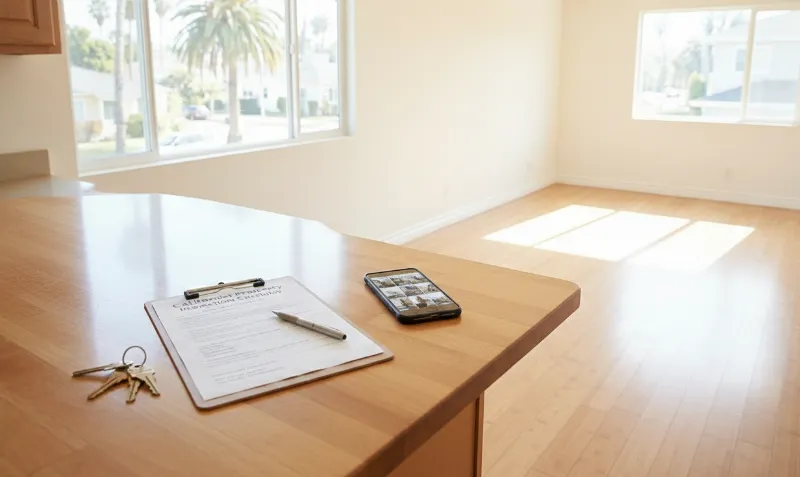
California Landlord Inspection Laws You Must Know
As a Property Inspector, I see many disputes caused by poor legal understanding. California law gives clear rules for inspections. Both tenants and landlords must know them.
California Landlord Inspection Law (Overview)
California allows landlords to inspect a rental property, but only with proper notice. A landlord must give advance notice before any inspection. This rule protects tenant rights during inspection and keeps the process fair. Inspections focus on the property condition at move-in and safety issues.
AB 2801 Documentation Law (Simple Explanation)
AB 2801 requires landlords to give written proof for security deposit deductions. Landlords must share photos, receipts, and a clear itemized deduction statement. This law helps avoid landlord-tenant dispute cases. Good documentation of property condition is key.
Tenant Rights During Inspection
Tenants have the right to be present during a rental walkthrough inspection. They can take photos and notes. They can ask questions. This helps protect tenants from unfair damage claims later.
Landlord Legal Obligations California
Landlords must record the rental property condition report honestly. They must respect privacy. They must follow the California security deposit timeline after move-out. Clear records help both sides and reduce problems.
Why Move-In Inspection Is Important for Tenants and Landlords
A move-in inspection protects both tenants and landlords from future problems. As a Property Inspector in California, I see that this step saves time, money, and stress.
Security deposit protection
A proper inspection records the exact property condition at move-in. This record helps protect the security deposit. When the tenant moves out, the landlord can compare both reports. This makes security deposit deductions transparent and fair.
Normal wear and tear vs tenant-caused damage
The inspection helps separate normal wear and tear from tenant-caused damage. For example, faded paint is standard. Broken tiles are damaged. Clear notes stop confusion later.
Avoid landlord-tenant disputes
Written reports and photos reduce landlord-tenant dispute risks. Both sides agree on facts from day one. This builds trust.
Rental property condition baseline
The inspection sets a clear rental property condition baseline. This baseline guides future move-out inspection checklist reviews and keeps the process smooth.
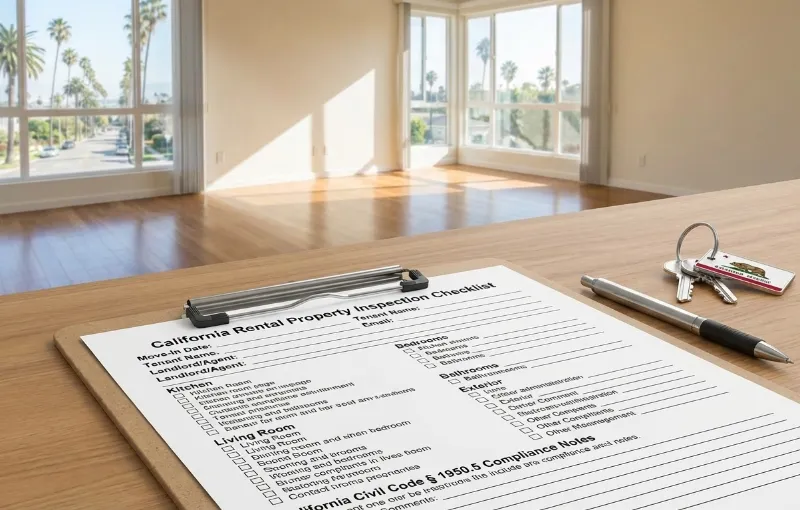
Move-In Inspection Checklist California (Room-by-Room)
As a Property Inspector, I always follow a move-in inspection checklist in California to check every room in a fair way. This process creates a clear record of the property condition at move-in. It helps tenants and landlords avoid future disputes. Always walk through the rental together and note every detail in the property inspection form.
1. Living Room Inspection
Start with the living room because tenants use it daily. Check the walls for marks, cracks, or nail holes. Look at the flooring for stains or loose tiles. Turn on all lights and switches to confirm they work. Open and close windows to test locks and screens. Take clear rental inspection photos to document the condition. This step helps define normal wear and tear from day one.
2. Kitchen Inspection
The kitchen needs careful attention. Open cabinets and check hinges and shelves. Test all appliances, like the stove and refrigerator. Run water to check plumbing and drainage. Look under the sink for leaks. Write all findings in the rental property condition report. This protects both sides from later claims of tenant-caused damage.
3. Bathroom Inspection
Bathrooms often cause disputes. Check for leaks around sinks, toilets, and showers. Inspect tiles for cracks or mold. Test all fixtures for proper water flow. Flush the toilet and listen for issues. Clear notes here help prevent security deposit deductions at move-out.
4. Bedroom Inspection
Inspect bedroom doors and locks for smooth use. Check closets, shelves, and rods. Review flooring for damage or stains. Note wall marks or paint issues. This creates a strong rental property condition baseline for future comparison.
5. Safety and Utilities Check
Safety comes first in every rental walkthrough inspection. Test smoke detectors and note their condition. Check electrical outlets and light switches. Turn on faucets to confirm water pressure. These steps support rental property maintenance and tenant safety.
Move-In Inspection Checklist PDF (What to Include)
A tenant move-in checklist PDF helps both landlords and tenants keep track of the rental property’s condition. This checklist includes basic items like walls, flooring, appliances, doors, windows, and plumbing. Using a proper property inspection form ensures nothing is missed. Always make sure the inspection report signatures are completed by both the tenant and landlord.
Signatures confirm that both parties agree with the property condition notes. This simple step protects everyone if there is a landlord-tenant dispute later. For example, if a tenant notices a scratch on the floor during move-out, signed reports show whether it was pre-existing or new damage.
Rental Inspection Photos and Documentation Best Practices
Taking time-stamped inspection photos during move-in is very important. These photos act as proof of the property’s condition. Always use high-resolution property photos to capture details like stains, cracks, or appliance issues.
Proper rental unit documentation should include both written notes and photos for each room. This documentation helps landlords make fair security deposit deductions and prevents misunderstandings. For example, snapping a photo of a small chip in the countertop at move-in ensures the tenant is not blamed for it later.
Move-Out Inspection Checklist California
A tenant move-out inspection protects both parties. Landlords use a move-out inspection checklist in California to compare the current condition with the move-in report. A pre-move-out inspection is helpful because tenants can fix minor issues before leaving.
This reduces disputes over tenant-caused damage and helps landlords plan rental property maintenance. For instance, if a tenant notices a leaky faucet during pre-move-out, fixing it prevents deductions from the security deposit.
Normal Wear and Tear vs Tenant-Caused Damage
It’s important to distinguish between normal wear and tear and tenant-caused damage.
| Feature / Aspect | Normal Wear and Tear | Tenant-Caused Damage |
| Definition | Natural aging of the property over time | Broken windows, large stains, and holes in the walls |
| Examples | Cannot be deducted from the deposit | Damage caused by the tenant’s actions |
| Security Deposit Impact | The landlord can deduct repair costs | Protects the landlord from unfair losses |
| Responsibility | Landlord | Tenant |
| Documentation Needed | Noted in move-in and move-out reports | Must be documented with photos and reports |
| Purpose | Shows normal property aging | Protects landlord from unfair losses |
Security Deposit Deductions and California Laws
Landlords must follow California security deposit laws when deducting money for repairs. An itemized deduction statement lists each deduction, including its cost and explanation. The California security deposit timeline requires landlords to return deposits within 21 days of tenant move-out.
Keeping a detailed rental property condition report ensures deductions are fair and legal. Tenants can compare move-in photos with move-out photos to check if deductions are reasonable. Proper documentation of property condition helps prevent tenant deposit disputes.
Common Move-In Inspection Mistakes to Avoid
Many disputes happen because of simple mistakes. Avoid these:
- Using an incomplete checklist that misses rooms or items.
- Skipping photo documentation of the property.
- Forgetting inspection report signatures.
Conclusion
A California move-in inspection rental property protects both tenants and landlords. By completing a thorough move-in inspection checklist, you document the property condition at the start. This record helps prevent disputes over security deposit deductions later. Tenants should carefully note any damages, and landlords should take rental inspection photos for evidence.
Clear documentation of normal wear and tear versus tenant-caused damage ensures fairness. Always sign and keep the rental property condition report safe. Following these steps makes the rental process smoother, protects deposits, and avoids misunderstandings. Proper move-in inspections are a simple way to save time, money, and stress for everyone involved.
Common Queries
Q1: Is a move-in inspection required in California?
A move-in inspection is not legally required, but it is highly recommended to document the property’s condition and protect both tenant and landlord.
Q2: Are landlords allowed to do inspections in California
Yes, landlords can inspect the rental property, but they must give proper notice and follow California landlord inspection laws.
Q3: What is the purpose of a move-in inspection?
The purpose is to record the property’s condition at the start of tenancy and prevent disputes over damages or security deposit deductions later.
Q4: How many inspections can a landlord do in a year in California?
There is no strict limit, but landlords must provide reasonable notice and conduct inspections for legitimate reasons only, such as maintenance or safety checks.





- Be Respectful
- Stay Relevant
- Stay Positive
- True Feedback
- Encourage Discussion
- Avoid Spamming
- No Fake News
- Don't Copy-Paste
- No Personal Attacks
- Be Respectful
- Stay Relevant
- Stay Positive
- True Feedback
- Encourage Discussion
- Avoid Spamming
- No Fake News
- Don't Copy-Paste
- No Personal Attacks
