
Do you want to decorate your walls but fear damage? Many renters avoid nails because nails crack paint and leave ugly wall holes. Homeowners also worry about chipped plaster and repair costs. I see this problem daily as an Art Installer. Nail damage to drywall and weaken wall surfaces over time. You lose your rental deposit. You waste time fixing small holes.
So what is the solution? You can learn how to hang paintings without nails in safe and simple ways. You do not need a hammer. You do not need to drill. You just need the right wall-safe hanging methods.
In this guide, I will explain 15 safe and renter-friendly ways to hang wall art without damage. I will share easy steps, real examples, and simple tools like adhesive strips and picture rails. This guide is beginner-friendly. You can follow each step with confidence. Let’s make your walls beautiful without a single nail.
Why Avoid Nails? (Quick Overview)
Many people use nails to hang wall art. Nails look simple. Nails feel strong. But nails create problems. I see these problems often as an expert freelancer and Art Installer. You can avoid stress by choosing wall-safe hanging methods.
Problems Caused by Nails
Nails may look simple, but they create several hidden problems for your walls and your home.
1. Wall Damage
Nails create holes in drywall. The hole stays even after you remove the painting. Paint chips around the nail head. The wall surface becomes weak. You must fill the hole and repaint the area.
For example, a small nail hole may look harmless. But when you remove a large frame, the paint may peel off. Repair takes time and effort.
2. Loss of Rental Deposit
Landlords check walls carefully. They notice holes and cracks. They may deduct money from your security deposit.
Many renters ask me how to hang paintings without nails because they want to protect their deposit. A nail-free method keeps the wall clean and safe.
3. Cracked Plaster
Older homes often have plaster walls. Plaster breaks easily. A simple hammer hit can cause cracks around the nail.
The crack spreads over time. Repair becomes expensive. You can avoid this damage by using damage-free picture hanging solutions.
4. Safety Risks
Loose nails create danger. A heavy frame may fall. A nail may bend under weight. The painting may drop suddenly.
This risk increases with heavy frames. Safety matters in every home. You must choose secure and wall-friendly hanging methods.
When You Should Choose Nail-Free Methods
You do not always need nails. In many cases, nail-free methods work better.
1. Rental Apartments
Renters should always protect walls. Rental agreements often restrict drilling and hammering. Adhesive hooks and command strips help you hang wall decor without nails.
You decorate your space. You keep the wall damage-free. You move out without stress.
2. Textured Walls
Textured walls crack easily. Nails break on uneven surfaces. Repair becomes difficult.
In such cases, you can use special adhesive strips or rail systems. These options support art without damaging the surface.
3. Temporary Decor
Do you like to change your decor often? Nails limit flexibility. Each change creates new holes.
Wall-safe hanging systems allow easy removal. You update your gallery wall without repair work.
4. Kids’ Rooms
Children move around actively. A poorly fixed nail can loosen. A falling frame can cause injury.
I always suggest safe alternatives for kids’ rooms. Adhesive hanging solutions reduce risk and keep walls clean.
What to Use to Hang Wall Art (Before You Start)
Before you learn how to hang paintings without nails, you must choose the right tools. The right material protects your wall. The wrong choice causes damage. I always check tools first before I start any art installation.
Let me explain each option in simple words.
Command Strips
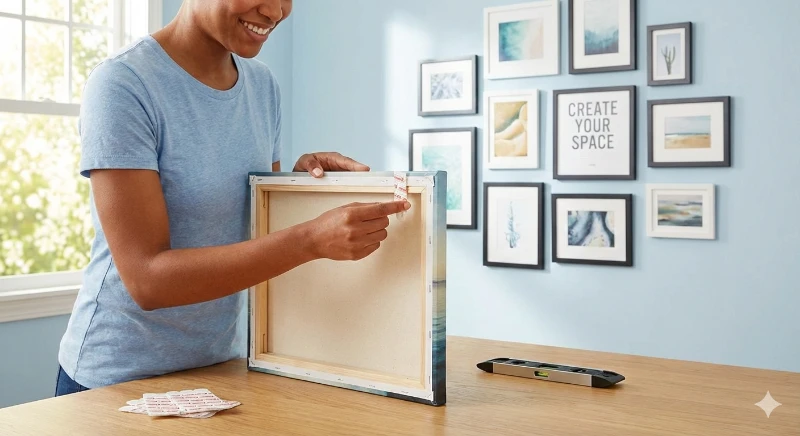
Command strips are strong adhesive strips. You stick them on the wall and on the frame. They hold the painting without nails.
- Best for light and medium frames
- Leave no holes
- Easy to remove
Example: I use command strips for small canvas art in rental apartments. They work well on smooth painted walls.
Adhesive Hooks
Adhesive hooks stick to the wall. You hang the frame wire on the hook.
- Good for frames with wire at the back
- Easy to install
- Renter-friendly solution
This method works well when you hang wall decor without nails in bedrooms or offices.
Mounting Putty
Mounting putty is soft and sticky. You press it behind lightweight art.
- Best for posters and paper art
- Good for temporary display
- Not for heavy paintings
I use mounting putty for kids’ artwork. It holds light items safely.
Picture Rail Systems
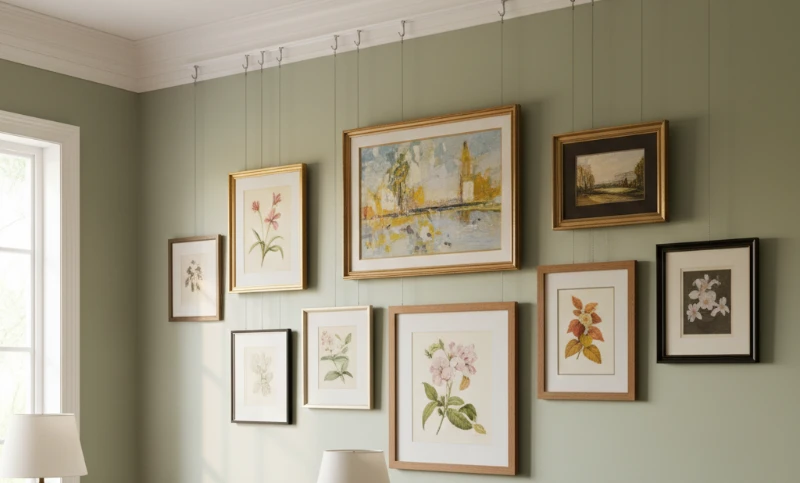
Picture rail systems hang art from molding near the ceiling. You attach hooks and wires to the rail.
- Good for gallery walls
- Supports heavier artwork
- No wall drilling needed
This method gives a clean and professional look. Many art collectors prefer this system.
String and Wire
You can hang a picture with a string or wire from hooks or rails.
- Adds decorative style
- Easy to adjust height
- Works well for creative displays
This method looks modern. It works great for creative ways to hang pictures without frames.
Tension Rods
Tension rods fit between two walls or between the floor and the ceiling. They require no drilling.
- Good for small apartments
- Safe for textured walls
- Easy to remove
This option works well when you hang paintings without nails on wall surfaces that are delicate.
Easels
Easels hold paintings upright. They do not touch the wall.
- Best for statement pieces
- Easy to move
- No wall contact
I use easels for large canvas art in living rooms. They create a gallery-style display.
15 Ways to Hang Paintings Without Nails
As an Art Installer, I always recommend using safe and wall-friendly methods to hang paintings. Here’s the first and most popular method:
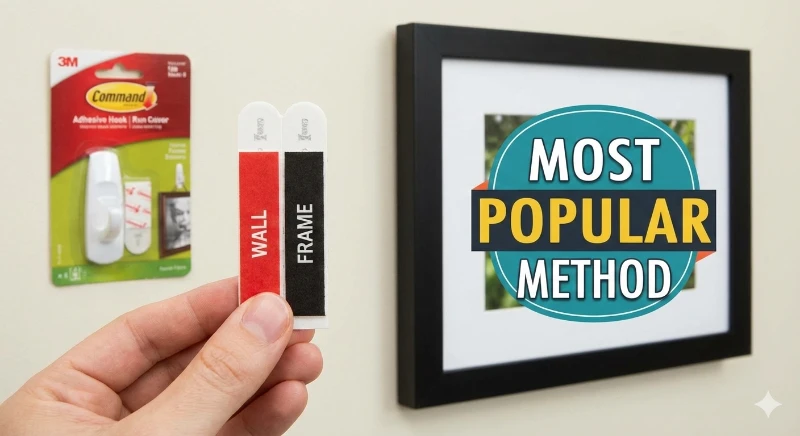
1. Command Strips (Most Popular Method)
Command strips are one of the easiest ways to hang paintings without nails. They are perfect for light and medium frames and help you avoid wall damage.
Step-by-Step Application:
- Clean the wall – Use a dry or slightly damp cloth to remove dust and dirt.
- Prepare the strip – Separate the strips and press them together until they click.
- Attach to the frame – Stick one side to the back of your painting.
- Press firmly on the wall – Hold for 30 seconds to ensure strong adhesion.
- Hang your painting – Attach the frame to the wall and press lightly.
Weight Guide:
- Small frames (1–5 lbs): Use one pair of strips.
- Medium frames (5–16 lbs): Use two or more pairs of strips.
- Heavy frames: Avoid Command strips alone. Consider combining with hooks or rail systems.
Pros and Cons:
Pros:
- No nails or holes
- Easy to remove
- Clean and flush finish
Cons:
- Not ideal for very heavy paintings
- Adhesive can fail on textured or damp walls
- Needs proper cleaning before application
2. Adhesive Hooks
Adhesive hooks are one of the easiest ways to hang paintings without nails. They work perfectly for framed art with wire on the back. You do not need a hammer, drill, or screws. This makes them ideal for renters or anyone who wants to protect their walls.
How to Position Adhesive Hooks Correctly
- Clean the wall first – Wipe the wall with a damp cloth and let it dry. This helps the hook stick firmly.
- Mark the spot – Use a pencil to mark where you want the hook. This ensures your painting hangs straight.
- Attach the hook – Peel the backing and press the hook firmly onto the wall. Hold for 30 seconds.
- Hang the painting – Place the wire of your frame onto the hook carefully. Make sure it is balanced.
Pro Tip: For heavy frames, use two adhesive hooks side by side. This distributes weight and prevents slipping.
3. Hanging Heavy Pictures Without Nails
Hanging heavy pictures without nails is possible if you use the right tools. Heavy-duty adhesive strips are your best friend. They can support larger frames and canvases safely.
Steps to follow:
- Clean the wall with rubbing alcohol.
- Choose strips that match the weight of your artwork.
- Apply multiple strips for extra support. For example, a 15-pound frame may need 4–6 strips evenly spaced.
- Press the strips firmly for 30 seconds and wait one hour before hanging your picture.
Safety tips:
- Always check the weight limit on the packaging.
- Avoid hanging heavy paintings on rough or humid walls.
- Test one strip first if unsure.
When not to use adhesive:
- Extremely heavy frames above 25 lbs.
- Antique frames or delicate canvases that may peel.
- Textured walls where strips cannot stick properly.
Using these tips, you can hang heavy pictures without nails and avoid wall damage.
4. How to Hang Pictures Without Nails on Textured Walls
Textured walls can be tricky because adhesives often fail. Smooth walls make hanging easy.
Options for textured walls:
- Use mounting putty for small frames or posters. It holds light art securely.
- Install a picture rail or wall-mounted rail system. You can hang multiple pictures using hooks or strings.
Pro Installer Tip:
- Avoid adhesive strips directly on bumpy walls—they may not stick and could fall.
- Always clean the wall first, even if using putty or rails.
These methods allow you to decorate textured walls safely without nails or damage.
5. Picture Rail or Molding System
If you want a long-term solution, a picture rail or molding system is perfect. It’s elegant and professional-looking.
Why it works:
- You hang multiple pictures without touching the wall.
- It supports heavier frames than adhesive strips.
- You can easily swap or rearrange art anytime.
Pro tip:
- Install the rail near the ceiling for a gallery-style effect.
- Use decorative cords or wires to hang paintings at eye level.
Picture rails are excellent for gallery walls, living rooms, or offices. They make your space look curated and stylish.
6. Leaning Artwork (No Hanging Needed)
Sometimes the simplest way to display art is not to hang it at all. Leaning artwork allows you to showcase paintings and frames without touching the wall. This method works for renters, textured walls, or anyone avoiding nails. It also adds a relaxed and modern vibe to your space.
How to do it:
- Place art on console tables, sideboards, or media units.
- Use fireplace mantels for larger pieces to create a focal point.
- Lean frames at a slight angle to the wall for stability.
- Layer smaller pieces in front of larger ones for a creative display.
- Ensure no heavy painting is at risk of falling—keep it safe.
Tip: Combine leaning artwork with small decorative objects for a curated look.
7. Use an Easel (Creative Display)
An easel gives your art a professional gallery feel without wall damage. Easels are perfect for statement pieces or when you want flexible displays. They work well in living rooms, entryways, or studios.
Options:
- Floor easels: Ideal for medium to large paintings. Adjust height as needed.
- Tabletop easels: Perfect for smaller prints or art on desks and shelves.
- Rotate artwork seasonally or for events without moving nails.
Tip: Always place easels on a flat surface to prevent tipping, especially with heavy frames.
8. Tension Rod Hanging System
Tension rods are smart solutions for small apartments or spaces where walls cannot be drilled. They allow you to hang paintings with string or wire without touching the wall.
How to use:
- Install rods between two parallel surfaces, such as the floor and ceiling or inside window frames.
- Hang pictures using clips, string, or hooks attached to the rod.
- Adjust placement easily to change art layout.
Tip: Use tension rods for creating mini gallery walls in limited spaces.
9. How to Hang a Picture Without Hooks on the Back
Frames without hooks don’t have to be a problem. You can still hang them safely using adhesives or wire systems.
Steps:
- Attach adhesive hangers directly to the wall or frame.
- Create a small loop of wire on the back of the frame if needed.
- Use Velcro strips for lighter paintings to ensure a flush finish.
Tip: Always check weight limits on adhesive products before hanging heavy pictures.
10. How to Hang a Picture with a String
String hanging is both creative and practical. It adds a modern twist and works without nails.
How to do it:
- Tie decorative string or thin rope to the frame’s top corners.
- Attach the string to a ceiling hook, molding, or tension rod.
- Adjust height and length to create the perfect visual balance.
Styling tip: Hang multiple paintings on the same string for a cascading gallery look.
11. Creative Ways to Hang Pictures Without Frames
Not all art needs a frame. You can showcase posters, prints, or lightweight pieces creatively using simple tools.
Ideas:
- Washi tape: Stick prints directly to the wall with colorful tape.
- Binder clips or clothespins: Hang from nails, rods, or strings.
- Clipboards: Swap artwork easily by clipping new prints.
- Poster rails: Hold unframed posters neatly at the top and bottom.
Tip: This method is great for kids’ rooms or temporary gallery walls.
12. Pegboard Display Wall
A pegboard wall allows full flexibility. You can create a gallery without hammering multiple holes.
How to use:
- Mount the pegboard once, using minimal screws or adhesive hooks.
- Hang art using hooks, clips, or wire on the pegboard.
- Rearrange pieces anytime for a new look.
Tip: Combine small and large art pieces for a dynamic, professional display.
13. Cork Board Wall
Cork boards provide an easy, lightweight, and damage-free solution for temporary art.
Steps:
- Mount cork panels or boards on a wall.
- Use push pins or adhesive tacks to attach art.
- Swap and reposition artwork effortlessly.
Tip: Cork walls are excellent for seasonal artwork, inspirational boards, or creative studios.
14. Velcro Heavy-Duty Strips
For canvas paintings or heavier art, heavy-duty Velcro strips provide a secure and flush mount without nails.
How to use:
- Clean the wall surface before applying Velcro strips.
- Stick one side to the wall, the other to the painting’s back.
- Press firmly and allow adhesive to set.
Tip: Use multiple strips for larger paintings to distribute weight evenly. Remove slowly to prevent wall damage.
15. Freestanding Display Screens
Freestanding screens create a movable gallery wall. This is perfect for collectors or flexible interior design.
How to use:
- Choose folding panels or pegboard-style screens.
- Hang art with clips, hooks, or string.
- Move screens to different rooms or angles as needed.
Tip: Combine multiple screens to create a full gallery without touching the walls.
Best Way to Hang Pictures Without Damaging the Wall
Do you want the safest method for your wall? You must choose the right solution based on weight and wall type. Every wall art piece needs proper support. The best way to hang pictures without damaging the wall depends on three things: weight, surface, and purpose.
Quick Comparison of Methods
| Situation | Best Method | Why It Works |
| Light art (1–5 lbs) | Command strips | Adhesive holds small frames safely |
| Heavy art (10–25 lbs) | Rail system | Rail spreads weight evenly |
| Textured wall | Tension rod system | No direct wall contact |
Light Art → Command Strips
Command strips work best for small frames, canvas prints, and photo frames. You clean the wall. You press the strip firmly. You wait one hour.
This method gives a clean finish. It protects paint. It works great for renters. I use this method in apartments where clients want zero wall damage.
Heavy Art → Rail System
Heavy paintings need strong support. Adhesive alone may fail over time. A picture rail system spreads the weight across the wall. It reduces pressure on one spot.
I recommend this method for gallery walls and large canvas art. This system gives stability and long-term safety.
Textured Wall → Tension Rod System
Textured walls create weak contact for adhesive strips. The surface feels rough and uneven. Adhesive loses grip.
A tension rod system solves this problem. The rod fits between the floor and the ceiling. The artwork hangs from wire or hooks. The wall stays untouched.
This method works well in rental homes with rough plaster walls.
How to Hang Paintings Without Nails Easy (Beginner Method)
Do you want the simplest way to decorate your wall? This method works best for beginners. I use this process daily as an Art Installer. You can follow these steps to hang paintings without nails easily and safely.
5-Step Simple Method
Clean the Wall
You clean the wall with a dry cloth. Dust blocks adhesive strips from sticking well. You can also wipe the area with a little alcohol. A clean surface helps command strips hold better.
Measure the Weight
You check the weight of your painting. Most adhesive strips show weight limits on the pack. Light frames need fewer strips. Heavy frames need strong wall-safe hanging strips. This step protects your wall art from falling.
Choose the Correct Strip
You select the right size strip. Small art needs small strips. Canvas wall art needs medium or heavy-duty strips. Always match the strip to the weight. This method gives you the best way to hang pictures without damaging the wall.
Press Firmly
You press the strip firmly on the wall. You hold it for at least 30 seconds. Firm pressure activates the adhesive. Strong contact prevents sliding.
Wait Before Hanging
You wait at least one hour before hanging the painting. This waiting time increases grip strength. Then you mount the artwork carefully.
Conclusion
You do not need nails to display beautiful wall art. You now understand how to hang paintings without nails using safe and renter-friendly methods. You can use adhesive strips, picture rails, tension rods, or easels based on your wall type and artwork weight. A renter can protect the deposit.
A homeowner can protect the paint. You can change layouts anytime. You can test creative gallery wall ideas without stress. Start small. Follow the steps. You can decorate without damaging your walls.
FAQs Section
Q1: Can I hang heavy paintings without nails?
Yes, you can hang heavy paintings without nails by using heavy-duty adhesive strips, rail systems, or strong wall-safe hooks that match the weight limit.
Q2: Do command strips damage walls?
No, command strips do not damage walls when you apply and remove them correctly according to the instructions.
Q3: What is the safest way for rental apartments?
The safest way for rental apartments is to use adhesive strips, tension rods, or leaning display methods that leave no holes behind.
Q4: How do I hang art on textured walls?
You hang art on textured walls by using mounting putty, rail systems, or tension rod systems because regular adhesive strips may not stick well.
Q5: What if my frame has no hooks?
You can attach adhesive hangers, add picture wire to the back, or use strong Velcro strips to hang the frame securely.